
Anxiety attack symptoms: what they mean and what to do
Updated: Jul 29

Anxiety attack symptoms are sudden, intense physical and mental reactions that occur when the body’s fight-or-flight response activates without a real external threat. Clinically, the term “panic attack” is the recognised standard, defined by the MSD Manual as requiring at least 4 of 13 specific symptoms, including chest pain, dizziness, palpitations, and fear of dying. Many people in New Brunswick experience these episodes and have no idea what is happening to them. Understanding what these symptoms are, why they occur, and how to respond is the clearest path toward feeling less afraid of them.
What are the common physical symptoms of anxiety attacks?
Physical symptoms are the most alarming part of an anxiety attack. They appear quickly, feel intense, and often mimic signs of a serious medical event. The body is not in danger, but it behaves as though it is.
The symptoms affect multiple body systems at once. Blood flow shifts dramatically during an anxiety episode, pulling resources away from digestion and toward the muscles and heart. That shift explains why so many symptoms feel physical rather than purely emotional.

Body system | Common symptoms |
Cardiovascular | Rapid heartbeat, palpitations, chest pain or tightness |
Respiratory | Shortness of breath, feeling of choking, hyperventilation |
Digestive | Nausea, stomach pain, diarrhoea |
Neurological | Dizziness, tingling, numbness, feeling faint |
Muscular | Trembling, shaking, muscle tension |
Many people visit emergency rooms believing they are having a heart attack. Panic symptoms closely mimic the body’s response to real physical danger, which is why the confusion is so common. A racing heart combined with chest tightness and shortness of breath feels indistinguishable from a cardiac event in the moment.
Pro Tip: If you experience chest pain during what you suspect is an anxiety attack, seek medical evaluation the first time it happens. Once a doctor has ruled out cardiac causes, you can approach future episodes with more confidence that your heart is not the problem.
Digestive symptoms deserve specific attention because they surprise people. Nausea and stomach pain occur because blood flow redirects away from the digestive system to the muscles during the fight-or-flight response. The gut is not malfunctioning. It is simply deprioritised by a body preparing to run or fight.
What mental and emotional symptoms accompany anxiety attacks?
The psychological side of an anxiety attack is just as disorienting as the physical side. Mental symptoms can make the experience feel surreal, frightening, and deeply confusing.
Common mental symptoms during an attack include:
Racing thoughts that feel impossible to slow down
An intense fear of dying or of losing control
Derealization, which is a sense that the world around you is not real
Depersonalisation, which is a feeling of being detached from your own body
Irritability and a low threshold for frustration
Difficulty concentrating on anything other than the fear itself
A pervasive sense of dread that something terrible is about to happen
These symptoms arise because the fight-or-flight response does not only affect the body. It floods the brain with stress hormones that sharpen threat-detection and suppress rational thinking. That is useful when facing real danger. During an anxiety attack, it produces a mental state that feels out of proportion to the actual situation.
The key distinction between these symptoms and ordinary worry is intensity and speed. Normal anxiety builds gradually in response to a stressful situation. The mental symptoms of an anxiety attack arrive fast, feel overwhelming, and often have no clear trigger. Feelings of dread and panic are not signs of weakness or instability. They are predictable outputs of a nervous system in overdrive.
How do anxiety attack symptoms differ from panic attack symptoms?
The terms “anxiety attack” and “panic attack” are used interchangeably in everyday conversation, but they describe slightly different experiences. Understanding the difference helps you communicate more clearly with a healthcare provider.
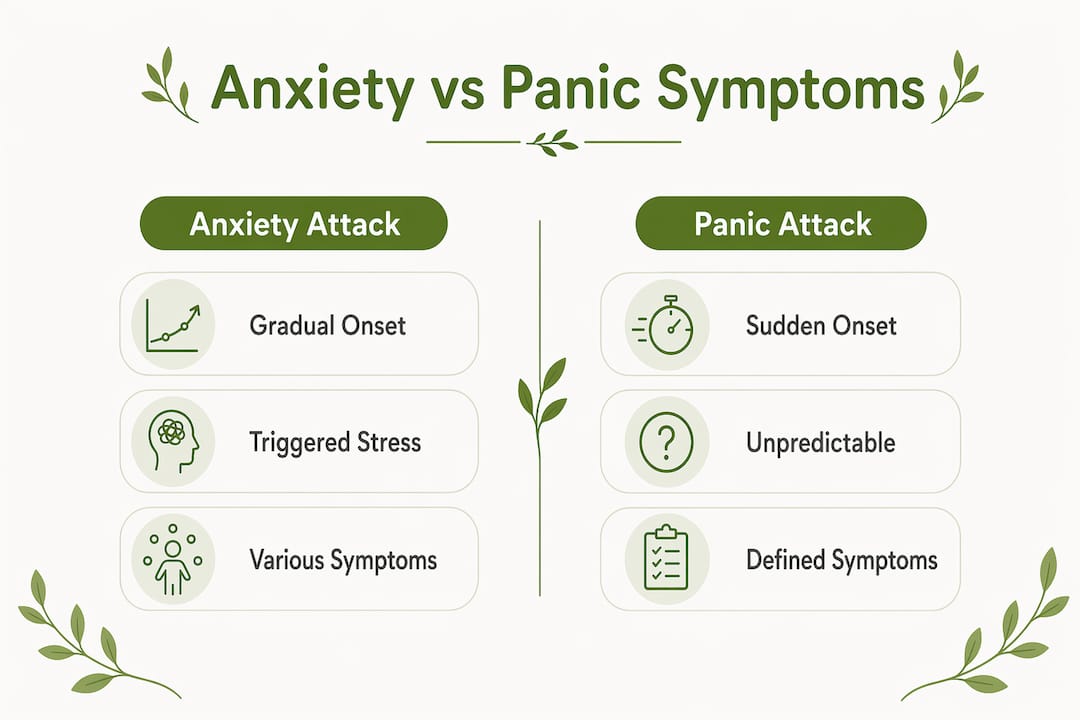
Panic attacks are sudden and unexpected, arriving without warning and often without an identifiable trigger. Anxiety attacks, by contrast, tend to build in response to prolonged stress or a specific situation. Both produce overlapping symptoms, but the onset and context differ.
Feature | Anxiety attack | Panic attack |
Onset | Gradual, often triggered by stress | Sudden and unexpected |
Trigger | Usually identifiable | Often no clear trigger |
Duration | Can last hours in lower intensity | Minutes up to one hour at peak intensity |
Clinical term | Not a formal diagnosis | Formally defined in clinical criteria |
Symptom count | Variable | Requires 4+ of 13 specific symptoms |
A panic attack requires at least 4 symptoms from a defined list of 13 and can last from a few minutes up to an hour. That clinical definition matters because it shapes how a doctor will assess and treat you. If you experience recurrent, unexpected panic attacks combined with persistent worry about future episodes, a diagnosis of panic disorder may apply.
A thorough medical evaluation is the right first step when symptoms are new. Ruling out other conditions with similar presentations, such as thyroid disorders or cardiac arrhythmias, is a standard part of responsible clinical care. Anxiety is a diagnosis of inclusion, not exclusion alone.
What causes these symptoms during an anxiety attack?
Anxiety attack symptoms are the direct result of the body’s fight-or-flight mechanism activating in the absence of real danger. This response is an evolutionary survival mechanism that triggers dramatic physical and mental changes designed to help you escape a threat.
When the brain perceives danger, real or imagined, it signals the adrenal glands to release adrenaline and cortisol. Adrenaline accelerates the heart rate, tightens the muscles, and sharpens the senses. Cortisol sustains that heightened state over time. Together, they produce every symptom on the list: the pounding heart, the shallow breathing, the sweating, the tunnel vision.
The neurological symptoms, such as tingling and dizziness, occur because hyperventilation reduces carbon dioxide in the blood. That chemical shift affects nerve sensitivity and blood vessel tone throughout the body. It is uncomfortable, but it is not harmful.
Anxiety and panic attacks are not medically dangerous, even at peak intensity. That fact is clinically established and worth holding onto during an episode. The body will return to baseline. The symptoms will pass.
Pro Tip: During an attack, remind yourself that the sensations are caused by adrenaline, not by a medical emergency. Naming the mechanism, “this is adrenaline, not danger,” can interrupt the fear cycle and shorten the episode.
How can you manage and respond to anxiety attack symptoms effectively?
Managing an anxiety attack starts with recognising what is happening. The faster you identify the episode, the sooner you can apply techniques that reduce its intensity.
Practical strategies that work in the moment include:
Controlled breathing: Breathe in for 4 counts, hold for 4, exhale for 6. The extended exhale activates the parasympathetic nervous system and slows the heart rate.
Grounding techniques: Use the 5-4-3-2-1 method. Name 5 things you can see, 4 you can touch, 3 you can hear, 2 you can smell, and 1 you can taste. This anchors attention in the present.
Muscle relaxation: Progressively tense and release muscle groups starting from your feet. This discharges physical tension and signals safety to the nervous system.
Symptom tracking: Keep a brief log of when episodes occur, what preceded them, and how long they lasted. Patterns reveal triggers and help clinicians tailor treatment.
Avoid avoidance: Steering clear of situations that trigger anxiety reinforces the fear. Gradual, supported exposure reduces sensitivity over time.
Professional support is the most effective long-term approach. Anxiety therapy that uses cognitive behavioural therapy (CBT) has strong clinical evidence behind it. CBT helps people identify the thought patterns that fuel anxiety and replace them with more accurate assessments of risk. Pharmacotherapy, typically SSRIs or SNRIs, is another option that a physician or psychiatrist can discuss with you.
Understanding anxiety and treatment options is a meaningful first step. Knowing that effective, evidence-based care exists makes the prospect of seeking help feel less daunting.
Key takeaways
Anxiety attack symptoms are the body’s fight-or-flight response misfiring without real danger, producing intense physical and mental signs that are distressing but not medically harmful.
Point | Details |
Physical symptoms span systems | Cardiovascular, respiratory, digestive, and neurological symptoms all arise from the same adrenaline surge. |
Mental symptoms are equally real | Racing thoughts, derealization, and fear of dying are predictable features, not signs of instability. |
Panic attacks have clinical criteria | A formal panic attack requires 4 or more of 13 specific symptoms and arrives suddenly without warning. |
Symptoms are not dangerous | Even at peak intensity, anxiety and panic attacks carry no medical danger to the body. |
Professional support changes outcomes | CBT and appropriate pharmacotherapy are evidence-based treatments that significantly reduce episode frequency and severity. |
What I’ve learned from watching people misread their own bodies
The most common mistake I see is people spending months, sometimes years, convinced they have a heart condition, a neurological disorder, or something else entirely. They cycle through specialists, collect normal test results, and still feel no better because the root cause has not been addressed. The body is telling the truth about its state. It is just telling it in a language that looks like physical illness.
What strikes me most is how much relief people feel the moment someone explains the mechanism clearly. Not reassurance in a dismissive way, but a real explanation: your adrenal glands released adrenaline, your heart responded, your breathing changed, your gut shut down temporarily. That is biology, not catastrophe. I have watched that explanation visibly change a person’s posture in a session.
The other thing worth saying plainly: anxiety attack symptoms in women are frequently underdiagnosed or misattributed. Women are more likely to present with atypical symptoms, including nausea, fatigue, and a sense of dread rather than the classic chest-clutching presentation. If you are a woman in New Brunswick who has been told your symptoms are “just stress,” push for a fuller evaluation. You deserve a complete picture.
Seeking help is not a last resort. It is the most practical thing you can do once you recognise what is happening.
— Dr. Virginia Chow, Clinical Director of Theraspace
Support for anxiety symptoms is available through Theraspace
Living with anxiety attacks is exhausting, and you do not have to figure it out alone. Theraspace offers online therapy and counselling in Montreal with a multidisciplinary team of licensed professionals who specialise in anxiety, depression, and trauma. Sessions are confidential, flexible, and accessible from anywhere in New Brunswick.
Theraspace’s approach goes beyond talk therapy. The team integrates evidence-based CBT, nutrition counselling, and acupuncture into personalised care plans that address both the mental and physical dimensions of anxiety. Reaching out is straightforward. You can connect with a practitioner who understands your experience and will work with you at your pace.


Comments